Three Reasons Why 3 Reasons Why Your Coffee Machine Beans Is Broken (And How To Repair It)


Choosing Coffee Beans For Your Coffee Machine
The kind of coffee beans you use in your coffee maker is essential to the quality of your brew. Select beans that have been freshly roasted and have balanced flavors.
The size of the grind is important as well; smaller grounds extract faster. Experiment with different sizes of grinding to find what suits you best.
Single-serve machines
If you're looking for convenience and convenience, you might want a single-serve coffee maker. These are usually designed to brew one cup at a time, which makes them ideal for dorms and desks for offices. In contrast to traditional coffee makers that require an enormous pot and several cups of water, they use pre-ground beans packed in capsules or pods and press them into hot water to remove the grounds and then brew the coffee. They are generally less difficult to maintain and clean than traditional coffee makers because they are made of fewer moving parts, but they might not make the best-tasting coffee.
They may help you save time in the morning, but they're not environmentally friendly. The amount of coffee waste created by pods could have circled the Earth 14 times in 2014. see post of plastic used in a cup continues to rise. If you're concerned about the impact of your actions on the environment, and would like to reduce your coffee-related waste, think about purchasing one-serve machines that use whole beans instead of plastic pods.
A coffee bean-to-cup machine comes with a grinder that process the beans prior to making coffee, making sure they are ground to the desired level of quality. The machine then pushes hot water into the ground to brew your coffee. This creates an aromatic, rich cup. These machines come with a wide selection of settings and options that can be adapted to make the perfect cup. These include the ability to select the grind size and strength, as well as temperature. They also come with a replaceable gold filter which eliminates the need for disposable filters, and some are programmable, allowing you to choose when you'd like your cup of coffee made.
Choosing the right single-serve coffee maker is based on your personal preferences, such as what types of drinks you prefer to drink and the speed at which you would like it to be brewed. Experts suggest considering factors like brew capacity and water reservoir size, as well as whether the machine is compatible with refillable pods or a basket of grounds that can be filled with coffee and prepared by hand. It is also important to look into whether the machine is electric or gravity-based. Electric models are quicker and more convenient, but gravity-based models are suitable for those who prefer to brew their coffee away from an electrical outlet, for example campers or hikers.
Compact coffee makers
If you're working with a small counter space There are some compact coffee makers that will still brew delicious strong, robust coffee. They come with an integrated scoop and can brew up to 14 cups of coffee. You can make enough for yourself or to give to family members or friends. They are usually low-profile and can be tucked away under cupboards.
Another benefit of a small coffee maker is that they typically have a simple and intuitive design. This makes them easier to use, particularly if you have kids or other family members that could assist with the morning coffee. Some models come with an easy-to-clean dishwasher-safe filter. This is an advantage if you choose to use reusable filters.
The Ninja Programmable XL 14-Cup Coffee Maker PRO is a great example of a sleek, easy-to-use, yet powerful, compact coffee maker. In our tests it brewed hot coffee and retained heat for up to four hours. Additionally the machine is compact and comes with a simple-to-clean carafe that is a snap to remove and rinse. Additionally, the coffee spout and milk spouts are easily removed to clean.
The pod-based machines may be simple to use, but they can add up over time with the cost of prepackaged capsules. They're also often made of plastic and hard to recycle. Plus, true coffee aficionados argue that capped beans don't produce the best end product.
If you're fed up of disposable coffee pods, but do not have the space for an espresso machine that's large, consider this model from Grind in London. It's a small metal coffee maker that makes use of water and beans to brew your favorite cup of joe. It even has a graphical indicator to inform you when the bin is full.
This compact pour-over coffee maker is ideal for the minimalist kitchen. It's affordable and easy to use, however it might not be the perfect brewing method for true coffee drinkers. It can only hold 17 ounces, which could be too small for some. It also uses paper filters, which aren't eco-friendly. If you're looking to streamline your morning routine and free up the space you have for counters in your kitchen, it could be a good alternative.
Espresso machines
Espresso machines are top-of-the-line coffee-making equipment that you'll find in a wide variety of cafes and restaurants. They function by pushing a small amount of near-boiling water through espresso beans that have been finely ground under high pressure. This brewing method delivers richly nuanced coffee and espresso with complex flavors, delightful aromas and a pleasant mouthfeel.
They have an accumulator to fill with water, a boiler that heats it to the correct temperature, and a portafilter for the coffee grounds. They might also come with a steam wand for adding milk to make lattes or cappuccinos. They are more advanced than single-serve models, and have more programmable options. They also require more frequent maintenance and cleaning cycles.
Espresso is typically brewed using these machines by placing an espresso bean scoop in the portafilter and then pressing on it with a pump or lever to apply the appropriate amount of pressure. The portafilter is then cleaned with hot water and lock it in place before brewing the next shot.
When using an espresso machine, it is essential to choose the correct coffee beans to accomplish the task. The beans that are too oily will leave sticky residues that can clog the coffee grounds chute between the grinder and the brew unit. This can also impact the taste of your coffee.
A high-quality espresso bean will have a smooth surface that isn't shiny, and it should be free of added flavoring. It's also essential to select an espresso that is suitable for the machine, and not too dark or smokey. Dark roasts may have bitter, burnt taste that could cause a negative experience.
The majority of espresso machines require regular backflushing and descaling than other coffee makers, but they're more easy to maintain. They're usually equipped with self-cleaning functions and an extra filter that helps to avoid the buildup of scale. You'll be required to follow the manufacturer's instructions for cleaning and descaler based on the model. These items are available in many places including online and most grocery stores.
Coffee grinders
For a lot of coffee lovers freshly ground beans are the most flavor. Grinding the beans whole prior to brewing prevents the loss of essential oils that give your cup depth and aroma. There are many ways to grind beans manually. However, some prefer a machine that grinds, stores, and dispensing exactly the right amount beans prior to when the brewing process gets underway. There are a few models that combine a coffee mill with a brewing system.
The most popular type of coffee grinder included with the brewer is an electric burr grinder. It utilizes two burrs that have sharp ridges to crush beans, resulting in the same size of grind and a superior taste compared to blade grinders. There are several grind settings to meet your tastes and the burrs can be adjusted easily for optimal performance.
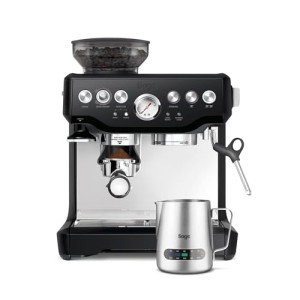
Manual burr grinders are also offered. These are cheaper but require a bit of old-fashioned elbow grease to use. The grinds aren't as smooth as the ones produced by an electric model, but there's a variety of settings that can be controlled to produce the results you want.
There are also blade grinders which use the spinning blade to cut the beans and are typically cheaper than burr grinders. However, they can produce beans that are not evenly ground and are noisy, especially during the grinding process.
Some grinders generate static, which can attract and clump particles. This can impact the quality of your coffee and lead to clogged grinders and hoppers. Some grinders feature anti-static technology, but you can also minimize this issue by running a humidifier, or dampening the beans before grinding.
Although the majority of models on the market include grinders, it's crucial to consider how much you'd like to spend and how often you'll be using it before deciding which coffee maker equipped with a grinder is right for your home. While the majority of models are inexpensive, some may cost upwards of $800 for a premium coffee maker that has a built-in brewer. If you're looking for a top-quality and affordable model, search for one that comes with an expensive grinder and an enormous bean hopper.